Our journey to net zero emissions
At Siderise, our mission is to ‘go beyond, contributing to safer buildings’, and that responsibility extends far beyond the products we manufacture. As the global climate challenge intensifies, we recognise our duty to address our environmental impact with the same integrity and commitment to continuous improvement that has always underpinned how we operate, invest and grow.
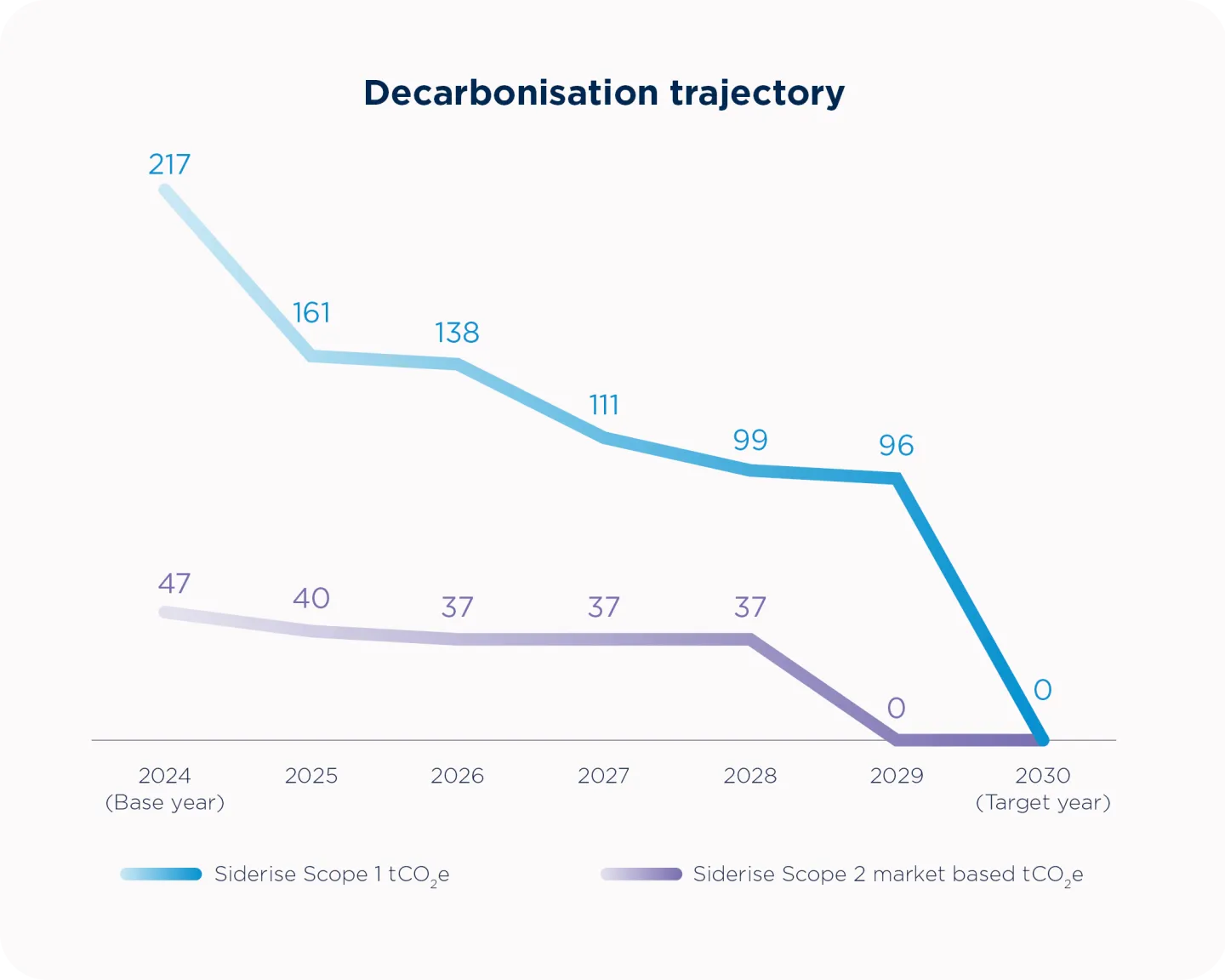
*The decarbonisation trajectory is based on current assumptions, available data, and planned initiatives at the time of reporting and may be updated as methodologies, technologies, operational requirements, and business conditions evolve.
**Location-based Scope 2 emissions reflect average emissions from the electricity grids where energy consumption occurs, while market-based Scope 2 emissions reflect emissions associated with the specific electricity products purchased by the organisation, such as renewable electricity contracts. Siderise’s Scope 2 decarbonisation targets are based on the market-based methodology.
Climate change mitigation is one of the material topics that matter most to our business and our stakeholders, and it is important, as a manufacturer, we take tangible steps to reduce the emissions we generate. In 2025, we updated our decarbonisation plan, which outlines the strategic initiatives and investments needed to achieve net zero greenhouse gas (GHG) emissions across Scope 1 and Scope 2 across all our global operations by the end of 2030, and net zero Scope 3 emissions by 2050.
Progress to date – Scope 1 and 2
Our decarbonisation journey began in 2023, when we began measuring and reporting our greenhouse gas emissions. Developing our initial emissions inventory enabled us to better understand our footprint and identify opportunities for immediate improvement. We subsequently selected 2024 as our formal baseline year because it reflected significant changes across several operations and provided a more representative picture of our ongoing footprint.
To date, our analysis shows that we are making strong progress in reducing our operational Scope 1 and Scope 2 emissions.
In 2025:
Scope 1 emissions fell by 26% to 161.25 tCO₂e.
Scope 2 location‑based emissions fell by 9% to 240.87 tCO₂e.
Scope 2 market‑based emissions fell by 14% to 40.46 tCO₂e.
These reductions have been driven by targeted investments and a sustained focus on operational efficiency across our sites.
Key initiatives include:
Completing a fully compressed air leak survey, which reported annual savings of 15,535 kWh.
Installing data loggers to support detailed energy use analysis.
Removing inefficient energy loads – including a 4kW vacuum pump and two 3kW macerator motors.
Improved operational controls: briefing teams on correct use of heating time clock controls; introducing a standardised heating temperature; and reducing nominal operating hours from 16 to 10 hours per day.
Refinements to extraction, heating, and compressed air-control systems.
Use of fast action doors to prevent unnecessary heat loss.
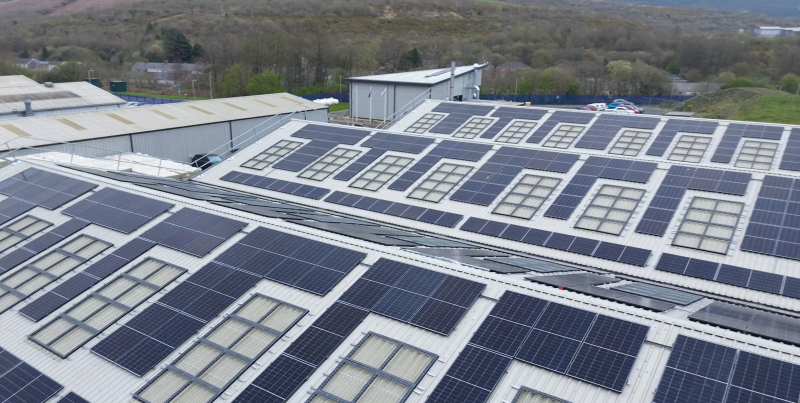
Renewable energy plays an increasingly important role. In 2024, we installed our first solar PV array at the Innovation Centre at our largest manufacturing site in Wales, generating approximately 2,087 kWh of renewable electricity annually. This year, a second, significantly larger PV system has been introduced at the same site, expected to generate a further 209.44 MWh each year. In addition, we procure 100% green electricity across our UK sites, supporting continued reductions in our Scope 2 market-based emissions.
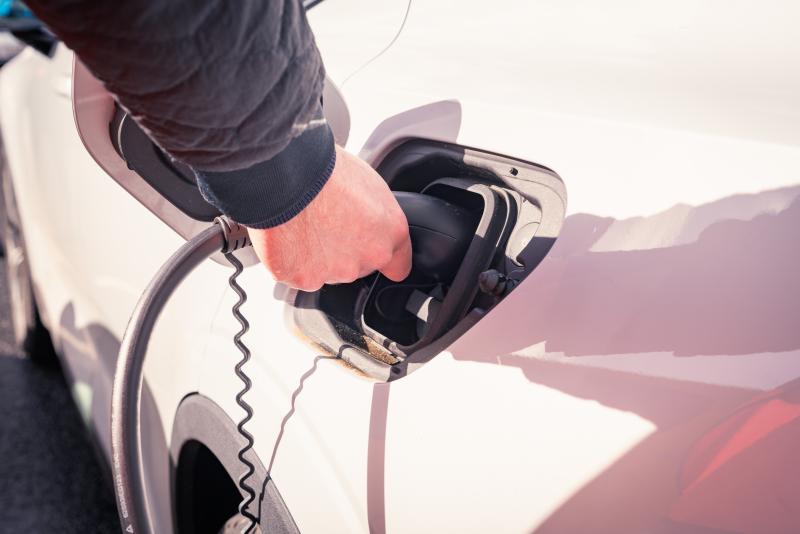
Our company car fleet is now also predominantly electric, with 80% fully electric vehicles and 4% hybrid vehicles. We plan to eliminate the remaining 16% of vehicles using petrol or diesel by 2030. We also plan to apply this to the forklifts in our manufacturing sites, with currently 7 powered by electricity, 1 by propane, and 2 by liquefied petroleum gas (LPG) across the UK. Plans include phasing out the remaining propane forklift by 2026 and transitioning to bio-LPG in the short term, until replacement with electric alternatives by 2027.
By 2030, we aim to achieve a 20% reduction in energy intensity at our manufacturing sites.
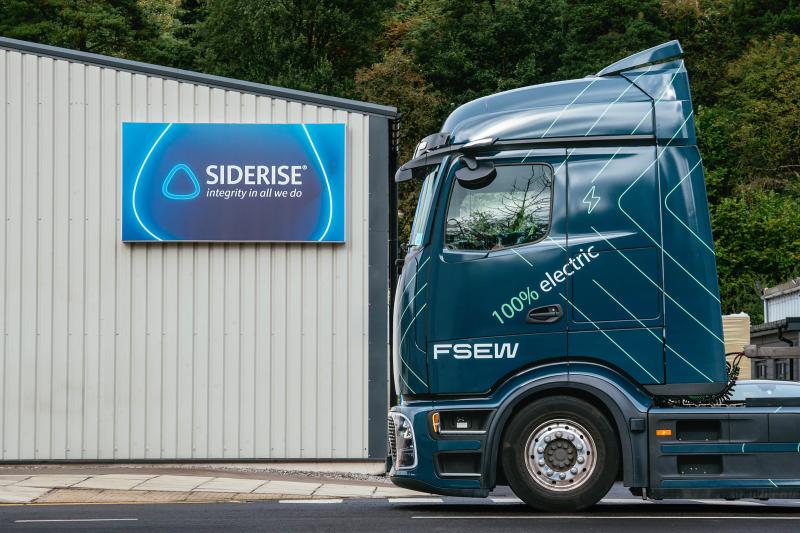
We are also making clear progress in reducing the impact of our transportation and logistics activities, including the movement of our goods. In 2025, 14 containers were transported through a lower-carbon logistics pilot combining electric HGVs with a maritime carbon-insetting programme. Based on information provided by FSEW, the pilot delivered estimated savings of 2.45 tCO₂e from road transport and 20 tCO₂e from sea freight.
This progress is underpinned by a consistent and robust approach to measurement. Scope 1 and 2 emissions are calculated using energy consumption data obtained from invoices and recognised government conversion factors, supported by the best available data for our international operations. Reporting covers carbon dioxide (CO₂), methane (CH₄) and nitrous oxide (N₂O), and follows an operational control approach, providing a reliable, Groupwide view of performance.
The challenge ahead – Scope 3
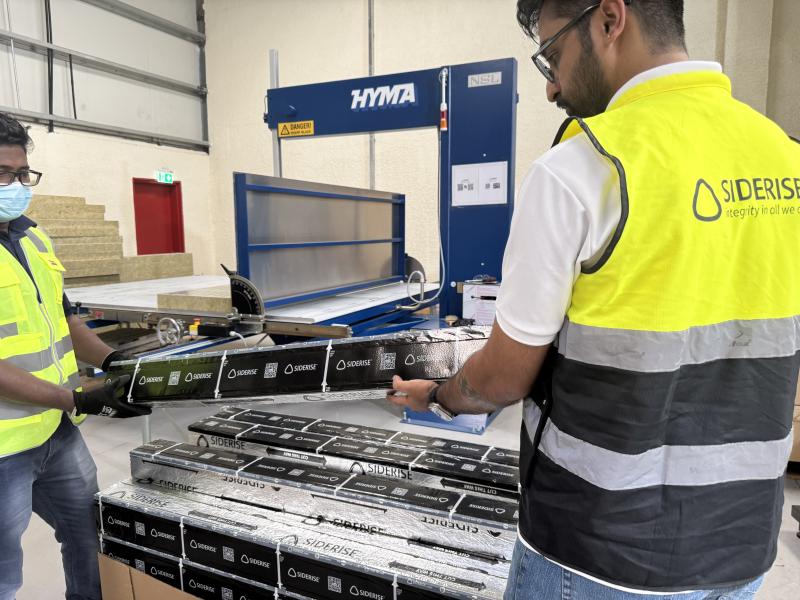
Completing our 2025 emissions inventory has given us a much clearer understanding of the scale and sources of emissions across our value chain.
In 2025, our reported Scope 3 emissions were 14,707 tCO₂e—approximately 99% of our total reported greenhouse-gas footprint when calculated using market-based Scope 2 emissions. Although reported Scope 3 emissions were around 7% lower than in 2024, the scale of the footprint makes clear that our greatest decarbonisation challenge lies beyond our direct operations.
Purchased goods and services accounted for 13,066 tCO₂e, or nearly 89% of our Scope 3 footprint. This is primarily associated with the carbon-intensive raw materials used in our products, particularly stone wool. Our product Life Cycle Assessments point to the same priority, indicating that approximately 80% of the embodied carbon of our assessed products arises from raw-material extraction and processing.
This means that operational energy-efficiency projects alone cannot deliver the reductions required across our full footprint. Meaningful progress will depend on improving supplier-specific emissions data, working with suppliers to reduce their own emissions, and increasing the availability and use of lower-carbon raw materials. We welcome emerging investment within the stone wool industry in electrified and lower-carbon manufacturing processes.
Other Scope 3 sources included business travel, upstream and downstream transportation, employee commuting, fuel- and energy-related activities, and operational waste. We will continue working to reduce these impacts, but the data shows that raw materials and supplier decarbonisation must remain our primary focus.
Our Scope 3 approach is at an earlier stage than our Scope 1 and Scope 2 plan. We have begun developing a longer-term roadmap towards net zero across all scopes by 2050. The next step is to improve data quality, establish measurable interim actions and translate our inventory into a prioritised value-chain reduction plan. As calculation methods and supplier data mature, we expect our Scope 3 inventory and roadmap to continue evolving.
Understanding product impacts through Environmental Product Declarations
To ensure our progress on decarbonisation is meaningful for customers and partners, we are focused on making product-level carbon data accessible and actionable at the point of specification. We undertake comprehensive Life Cycle Assessments (LCAs), and, in 2025, met our target of having Environmental Product Declarations (EPDs) published for our core product ranges.
An EPD provides a comprehensive view of a product’s environmental impact through its entire lifecycle, from sourcing our raw materials to the manufacturing process, all the way to the end-of-life impact of our products. These documents provide transparent data on the environmental impact, helping partners and clients evaluate product sustainability and circularity. EPDs are also widely recognised within leading international building standards, including BREEAM, LEED, IGBC, DGNB, WELL and HQM, contributing to whole-building carbon assessments.
By embedding this level of transparency into our product portfolio, we are helping to ensure that our decarbonisation progress is translating into the creation of a lower carbon-built environment.
Watch our ESG Director, Sera Turkoglu, explore the importance of EPDs for our business.
What’s next?
Whilst we are encouraged by the progress we have made, we recognise that this is just the beginning. Decarbonisation is not a one-time initiative, but a continuous process of improvement, innovation and collaboration. There is no single solution to decarbonisation, and the path forward will continue to evolve, especially as our business continues to grow globally. With a clear roadmap to 2030 and continued investment in renewable energy, electrification and energy efficiency, we are confident in our ability to reduce Scope 1 and Scope 2 emissions towards net zero while building a stronger, more resilient business. Alongside this, we will continue improving the quality of our Scope 3 data and developing a prioritised value-chain reduction roadmap focused on supplier engagement and lower-carbon raw materials, supporting our longer-term ambition to achieve net zero across all scopes by 2050.
Contact us
We're here to help you
Call for our main switchboard
Email us for technical enquiries
Email us for site support
Complete the form for the right response