What do India’s new National Building Construction Standards mean for façade fire safety?
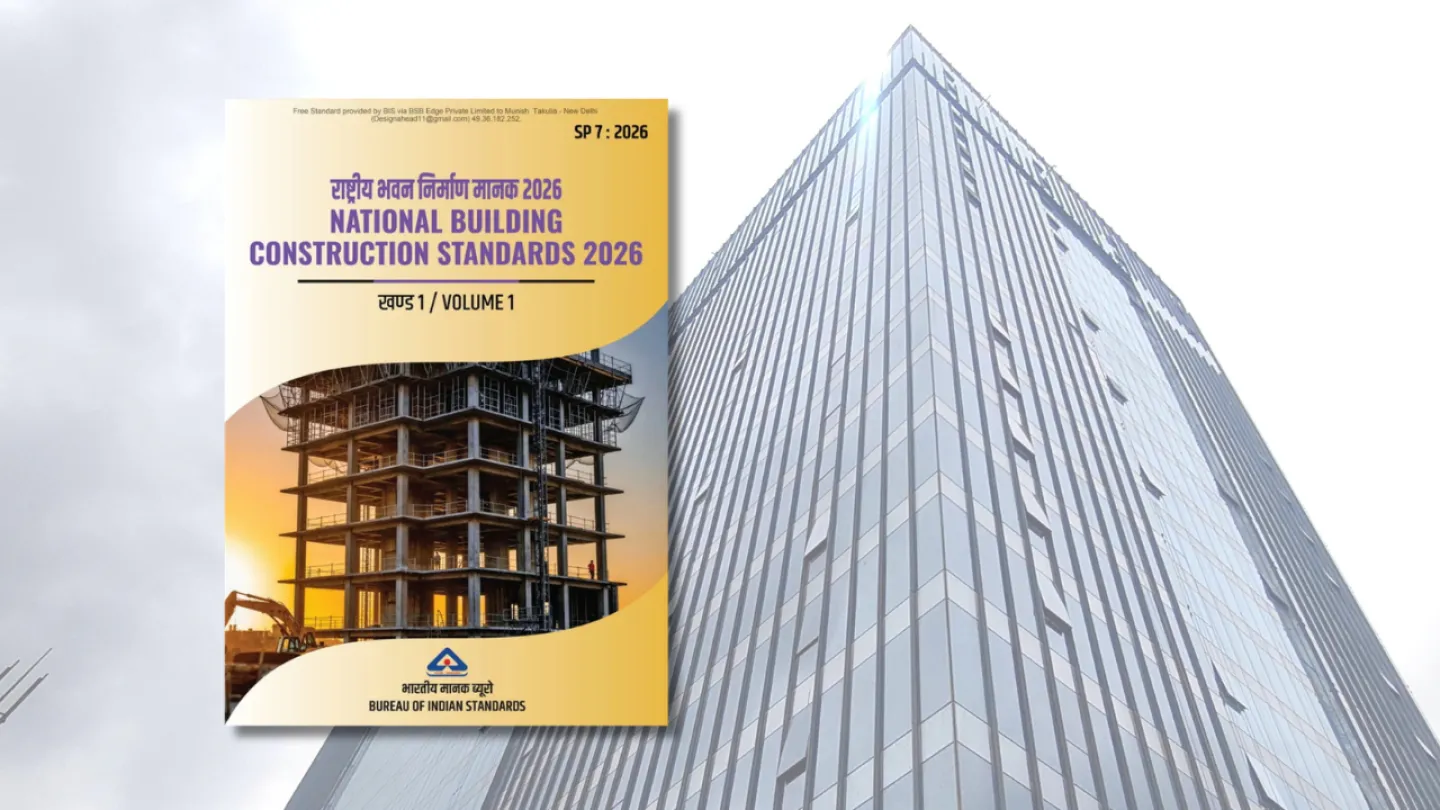
On 30 April 2026, the Bureau of Indian Standards (BIS) withdrew the National Building Code 2016 (NBC 2016) and replaced it with the new National Building Construction Standards 2026 (NBCS 2026). This update, formally designated SP 7: 2026, marks a significant shift in how building work and fire safety are regulated across the country. In this Insights blog, we will cover some of the most important changes for façade consultants, designers and contractors working in the region to be aware of.
Prescriptive requirements are greater than performance-based compliance
BIS was established as the National Standards Body of India when the BIS Act 2016 came into effect. It positions NBCS 2026 as a ‘standard’ to adhere to, rather than a ‘code’ that must be explicitly followed, reflecting a move toward modern, flexible, performance-based construction standards. This is exemplified in the Part F fire and life safety provisions, where the tone has shifted from ‘shall’ to ‘should.’ Rather than having to follow defined materials, wall build-ups, and construction details such as cavity widths, designers can now choose the best approach and solutions for their projects, providing they can demonstrate compliance with the NBCS’s required outcomes.
For façade system specification, this increases the importance of:
Tested systems with validated performance.
Specialist engineering input from engineers and manufacturers , particularly in fire and façade design.
Robust documentation to support approvals and reviews.
This shift in approach from NBC 2016 aligns with India’s constitution, with NBCS 2026 acting as a technical reference point at a federal level, leaving it up to state governments and municipal authorities to interpret and enforce it however they feel best suits their jurisdiction and local priorities.
Whilst some may view this reduced prescriptiveness as a dilution of the safety standards, it in fact encourages the industry to not only take more accountability for the performance of their designs but also find new and innovative solutions that will ultimately create better building standards all round.
Higher threshold for high-rise fire safety
NBCS 2026 also introduces a significant shift in how high-rise buildings are defined and regulated. The threshold for mandatory central fire and life safety provisions has been raised from 15 to 24 metres, narrowing the scope of buildings automatically covered at a national level. This means it will be up to state and municipal regulators to define requirements for buildings below 24 metres, especially those that fall into the mid-rise 15-24 metre category. However, in practical terms, the more robust performance-led approach encouraged by the NBCS 2026 is likely to have a profound impact not only on the way designers approach all façade design but also on client expectations regardless of building height.
Adoption of IS 18190: 2023 for curtain wall perimeter fire barriers
One of the biggest changes affecting curtain walling systems is the adoption of national test method IS 18190: 2023 Fire Resistance of Perimeter Fire Barrier Joint System as the path to compliance for perimeter fire barriers. IS 18190: 2023 sets out a methodology for assessing the fire resistance performance of perimeter fire barrier assemblies used for sealing the joint between the floor slab and curtain wall. It drew on established standards ASTM E2307- Standard Test Method for Determining Fire Resistance of Perimeter Fire Barriers Using Intermediate-Scale, Multi-story Test Apparatus, as well as UL 2079 – Tests for Fire Resistance of Building Joint Systems to create a robust approach that clearly demonstrates how the proposed solutions perform in relation to withstanding movement in the perimeter joint, maintaining the fire resistance of the floor slab and preventing fire and smoke spread.
A new era for the façade sector in India
NCBS 2026 lays the foundation for India to create a safer and more resilient built environment, designed to protect people and deliver long term value. For specifiers, developers and contractors already committed to ensuring quality and compliance, its performance-based approach is a welcome gear change that will not only allow more innovation but also improve the quality of the product supply, as manufacturers who cannot produce credible and current supportive test certifications or the right documentation are unlikely to be used.
Siderise in India
We have been supplying all kinds of buildings in India with high-quality and robustly tested passive fire protection and acoustic solutions for decades, from hospitals to high-residential and commercial towers. In fact, in January 2026, we delivered our 600th project with our distribution partner, Allarch. However, we don’t just see ourselves as supplying to the market, but as a key player within it, helping all levels of the industry improve their approaches to fire and life safety. This includes participating in technical working groups and conferences with federal and state level fire professionals, providing classroom and onsite educational opportunities and investing in ensuring our products adhere to Indian test standards such as IS 18190: 2023.
Interested in learning more? Contact our India team [email protected]
Contact us
We're here to help you
Call for our main switchboard
Email us for technical enquiries
Email us for site support
Complete the form for the right response