Why is positive mechanical retention
key to the performance of
open state cavity barriers?
Horizontal open state cavity barriers (OSCB), also known as intumescent fireblocks, are critical to the safety and performance of ventilated façade systems. In the cold state, they partially fill the ventilation gap allowing for free-flowing air movement and moisture egress. In the event of fire, the intumescent on the exposed edge of the barrier activates upon exposure to heat at circa 130°C / 266°F, then exfoliates to close the air gap behind the cladding panel and create a fire seal. However, to be able to provide this protection for the designed life of the building, OSCBs are required to be appropriately and robustly fixed to the internal substrate using a retention method that prevents barrier displacement — allowing them to preserve the specified air gap in the cold state and maintain integrity during fire exposure.
In this Insights piece, we will explore why the fixing method of an OSCB is a critical factor that should not be overlooked during the design and specification process.
How can the fixing method impact the performance of open state cavity barriers?
Buildings and their façades are constantly subjected to forces that can cause them to move— including wind loads, temperature changes and settlement. In a fire, heat-induced air pressure and thermal expansion places further stress on brackets and fixings. If they lack sufficient tensile strength or retention capability, these factors can all potentially cause them to fail and the OSCBs to partially or completely detach from the internal construction.
This cavity fire barrier displacement can cause various problems, including:
Possible thermal efficiency and moisture management issues due to fallen cavity fire barriers obstructing ventilation and drainage flow in the cavity.
Compromised fire compartmentation due to gap formation between the substrate and the rear of the barrier, leading to the vertical spread of fire through the unseen cavity.
Severe misalignment of the OSCB that can lead to its intumescent layer not exfoliating within the limits of its stated air gap range, thus failing to form a complete seal against the opposing surface by not fully closing the width of the void.
To mitigate these risks, OSCBs must be selected with support brackets and fixings that are designed to keep them securely in position even when subjected to differential movement or fire-induced stresses, and that allow for the intumescent to fully exfoliate when exposed to the heat of a fire.
What fixing approaches are typically used for open state cavity barriers?
Whilst building codes and regulations do not prescribe specific fixing methodologies, there is statutory and voluntary guidance that advocates for cavity barriers to be mechanically fixed in position. There are several common approaches to mechanically fixing cavity barriers:
Direct through-fix to substrate using non-combustible fixings (small voids) – usually stainless-steel countersunk head screws with washer sitting flush with intumescent face and screwed at a sufficient depth into substrate.
Mechanically fixed partial penetration brackets (large voids) – usually stainless-steel spikes that penetrate the width of the barrier by typically 50-75% and fixed to the backing wall using non-combustible stainless-steel fixings, sometimes with pigtail screws piercing through the intumescent into the barrier.
Mechanically fixed full penetration brackets with bent tails (large voids) – as above without pigtail screws but with ‘tails’ piercing through the intumescent on the leading edge of the barrier that faces the open airspace of the cavity. These are bent flat, or ‘counter folded’, to the outer face to positively retain the barrier and the intumescent.
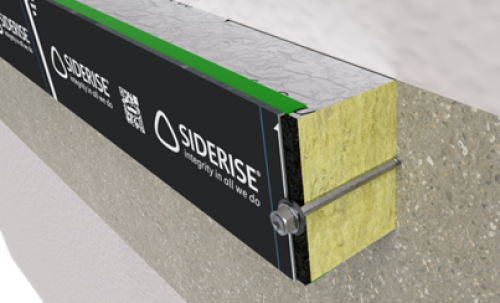
Figure 1: For small voids, open state fire barriers tend to be fitted using a direct through fix to the substrate.
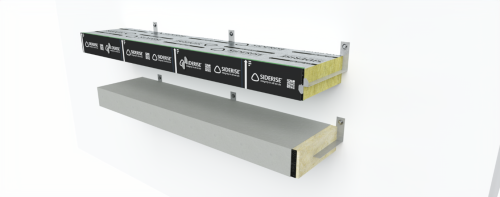
Figure 2: Side by side comparison of mechanically fixed full penetration brackets with bent tails (top) and mechanically fixed partial penetration brackets (bottom) in large voids (for illustration purposes only).
Fixing guidance in Approved Documents B (separate editions for England and Wales), Technical Booklet E (Northern Ireland), and Technical Guidance Document B (Republic of Ireland)
These all require cavity barriers to be tightly fitted to a rigid construction and mechanically fixed in position. They go on to say that they should be fixed so that their performance is not rendered ineffective by failure of the cavity barrier fixings during a fire, building and external envelope movement, or the collapse of penetrating services or failure of abutting construction. This means that they need to be retained securely using suitable fixings, and without support from the envelope.
UAE Fire and Life Safety Code 2018
Section 4.5.4.6 of the code states that "The cavity fire barrier shall be mechanically bonded to the primary substrate or structural frame."
2024 International Building Code (IBC)
Section 718.2.1 of the code requires “batts or blankets of mineral wool, mineral fiber, or other approved materials” to be “installed in such a manner as to be securely retained in place”, whilst Section 718.2.1.4 stipulates that the “integrity of fireblocks shall be maintained.”
Centre for Window and Cladding Technology (CWCT)
Advice from CWCT reinforces the need for secure barrier retention but goes several steps further in both its Technical Note TN116 Fire performance of facades - Application to built-up walls (which updates previous guidance contained in CWCT TN98 Technical Note 98 Fire performance of façades - Guide to the requirements of UK Building Regulations) and Guidance on Built-up Walls publications. It advocates more specifically for open state cavity barriers used within ventilated façades to be fixed with brackets that penetrate the full thickness of the barrier with tails bent over to positively retain the barrier in position.
For instance, Section 6.6.3.2.3. of Guidance on Built-up Walls that focuses on cavity barriers in rainscreen constructions states:
“To be effective, these should be securely fixed to the face of the back wall or preferably, for cavity barriers on the line of compartment floors, the concrete slab edge. This will require a break in the thermal insulation in the rainscreen cavity... Steel spikes are used to fix the barriers, and these should penetrate the full thickness of the barrier with the tails turned over to positively hold the barrier in position. Failure to do this may allow the barrier to fall down the cavity making it ineffective as a fire barrier and possibly blocking drainage.”
In section 4.24, it cites instances where this issue has been encountered, demonstrating that this is a very real potential problem:
“Cavity barriers should be positively fixed in position to ensure their effectiveness. Cases of barriers sliding off spikes and collecting at the foot of the cavity have been reported.”
Furthermore, paragraph 58 of TN116 states:
"Fixings that provide positive restraint to open state cavity barriers such as spikes that penetrate the full thickness of the barrier and are then bent over to restrain the cavity barrier are preferable to spikes that merely penetrate part way through the barrier. In addition to providing a more secure fixing, the return remains visible making it easier to check that the fixings have been installed at the required frequency..."
Construction Leadership Council (CLC)
The CLC publication 'Building Control for a new Higher-Risk Building' says:
"In the case of open state cavity barriers (OSCBs), installers should confirm mechanical retention of the OSCB."
Why are positive full penetration mechanical retention brackets considered more robust than partial penetration push-to-fit brackets?
Using OSCBs with full penetration brackets that have retaining bent tails can support effective compartmentation in several ways. They enable the cavity barrier to be firmly secured to the substrate, preventing it from moving laterally during its service life. This allows it to maintain contact with the backing wall to provide an effective cavity barrier.
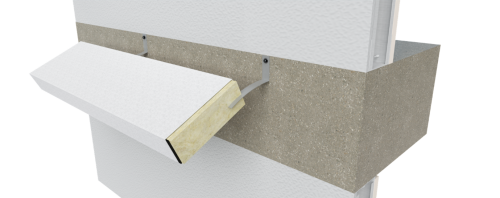
Figure 3. Diagram of how cavity barriers can slip off partial penetration brackets, leaving a gap between the barrier and the internal substrate (for illustration purposes only).
Full penetration brackets can also help to support the structural strength of the cavity barrier by allowing the weight of the barrier to be supported by the inner leaf, instead of relying on the tensile strength of the bracket alone. Additionally, an equilibrium is created between the barrier’s outer face and the bent tails when the bracket is fixed to the substrate above the OSCB, which can increase the structural strength of the OSCB to prevent sagging.
These types of brackets also offer benefits during the installation stage. Whilst bending the bracket is a small extra step to ensure a secure fix, these types of brackets are often supplied with pre-engineered features that not only save time but also help to ensure an accurate installation. For example, they are typically available in a range of lengths to suit different void sizes and with fixed length tails, eliminating the need to cut them to size onsite. They also often feature pre-drilled fixing holes, as well as a notch feature to make them easy to bend to the right shape.
Additionally, they do not rely on the external envelope / exterior wall covering for retention. They can be fitted at an earlier stage of the construction process reducing scheduling stresses. They are also much less likely to be dislodged or disrupted during the installation of the exterior wall covering. It is also much easier for installers and inspectors to confirm if the OSCBs have been installed correctly. Some types of open state barriers, on the other hand, require hand-screwed pigtail screws to be wound out until they touch the inside face of the cladding – after the cladding has been installed.
Did you know that Siderise RH Rainscreen Horizontal Open State Cavity Barrier comes with our RS Series Fixing Brackets? Available in galvanised or stainless steel, depending upon project requirements, they are supplied in a 25mm width in a range of lengths to suit the required void size. Learn more: https://www.siderise.com/fire-safety/ancillaries/siderise-rs-series-fixing-bracket
How can the installation quality of positive full penetration mechanical retention brackets be confirmed onsite?
The CIOB-RIBA Guide to Managing Safety-Critical Elements in Building Construction stresses the importance of inspecting cavity barriers as safety-critical elements, stating that:
“[F]or all Elements that contribute towards fire and smoke compartmentation of a building - The compartmentation must be assumed to be part of a considered design, so there could be a significant risk of a serious injury or fatality if it was compromised by incorrect installation and there was a fire. Therefore, the compartmentation in its totality is a Safety-Critical Element.”
Cavity barriers whose retention is reliant on the external facade being installed can present a challenge when it comes to inspection—requiring a section of the facade to be deconstructed to check how they have been fitted. Meanwhile, full penetration brackets with bent tails can simplify this process as their visible tails eliminate the need for destructive inspections in build ups where the thermal insulation abuts the open state cavity barrier from both above and below.
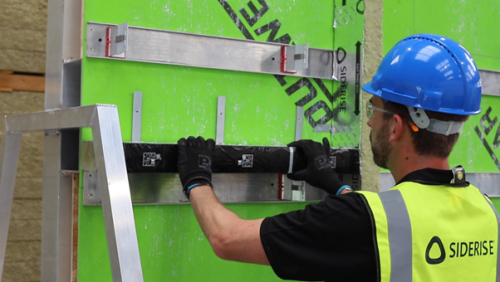
Figure 4: Installation of OSCB with positive retention bracket, demonstrating the visibility of the bent ends.
Siderise offers both in-person and remote inspections via our specifically developed Inspection App that allows users to capture images as each area / element is installed and update the data input fields using their smartphone or tablet. These can then be reviewed offsite by our technical team to ensure the installation meets recommendations and quickly identify any potential issues with the fixing methods.
The final inspection report can be included in the handover information, providing a clear record of exactly what passive fire protection measures were installed and how. This helps to maintain the Golden Thread of product information and can be a useful reference point for any future modifications to the project that may affect the building envelope.
What testing and certification should I consider?
As the fixing method is so integral to the performance of OSCBs, it is important to look out for products that have been subjected to testing with their fixing methods. This includes looking for products with a measured and defined design life, and that have been put through tests that replicate their intended application— demonstrating that they maintain integrity in real-world thermal and mechanical conditions.
The Association for Specialist Fire Protection (ASFP) Technical Guidance Document TGD 19 and the recently published EN 1364-6: 2025 (Fire resistance tests for non-loadbearing elements. Open-state cavity barriers) standard, outline the test configurations and failure criteria for testing Openable Smoke Compartment Barriers (OSCBs).
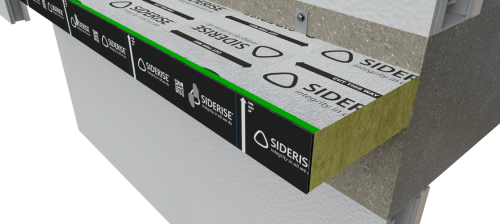
Figure 5: Siderise RH Rainscreen Horizontal Open State Cavity Barriers are tested and certified based on the use of fully penetrating brackets with retaining bent ends.
Whilst this test can determine standalone cavity barrier performance and therefore general suitability for the purpose it is marketed for, it is only through large-scale testing that we can fully understand how complete assemblies might perform in a real-life fire scenario. Such testing examines all the system components together, providing data on how the different products interact, along with the impact of details such as fixings, joints, gaps, and penetrations on the overall fire performance. Therefore, data from large scale systems tests such as BS 8414-1 & 2 and NFPA 285 that evaluate the performance of a complete façade assembly can be invaluable when considering any type of cavity barrier.
It is important to note that, even with the inclusion of positively retained cavity barriers, systems can fail if the external cladding allows the fire to spread up the outside of the building causing the panels to move, break down or come away. Any malfunction with the cladding would likely leave a path for the flames to spread up and over the cavity barrier and up the cavity. Therefore, it is vital to always refer to the latest specialist advice for façade design and specification, and to ensure high quality workmanship at every stage.
Siderise RH Rainscreen Horizontal Open State Cavity Barrier has been tested to ASFP TGD19 ‘Fire Resistance Test of Open State Cavity Barriers’ using principles of BS EN 1363-1. It has also featured in cladding systems assessed under multiple large-scale fire tests, including BS 8414 and NFPA 285.
Contact us
We're here to help you
Call for our main switchboard
Email us for technical enquiries
Email us for site support
Complete the form for the right response